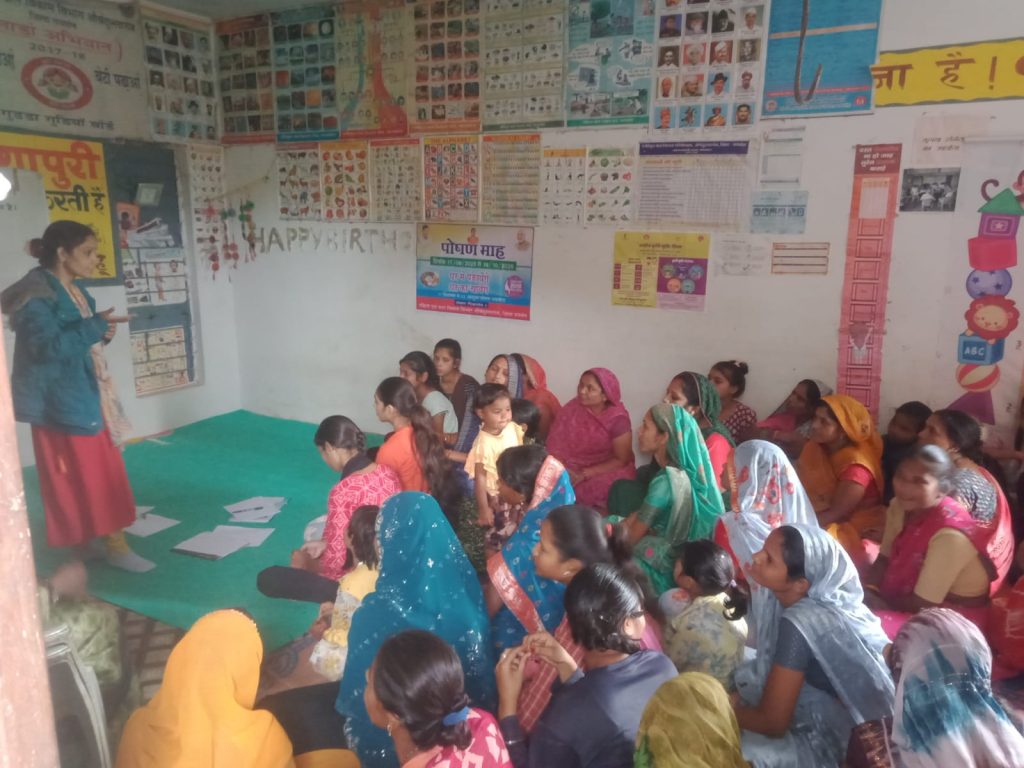
Project Nandani: Empowering Women and Girls Through Menstrual Hygiene Awareness
Project Title: Menstrual Hygiene Management and Awareness on Nutrition in 20 villages of Obedullaganj Block of Raisen District of Madhya Pradesh Project.
Goal: To improve menstrual hygiene management practices and Awareness on Nutrition among the adolescent girls and women in 20 villages of Obedullaganj Block of Raisen District of Madhya Pradesh
Objective 1: Enhance knowledge Empowerment
Indicators:
- Increased the knowledge of adolescent girls, women, and caregivers on menstrual hygiene management and nutritional practices.
- Increased the number of participants attending awareness-raising sessions and workshops o Improved scores on pre-and post- training assessments measuring understanding of menstrual hygiene and nutrition.
Objective 2: Facilitate access to menstrual products
Indicators:
- Increased the number of participants reporting improved access to safe and affordable menstrual products
- Increased the number of distributed menstrual products (Reusable pads, menstrual cups, etc)
- Reduction in stances of inadequate or unavailable menstrual products reported by beneficiaries
Objective 3: Cultivate positive Menstrual Attitudes
Indicators:
- Increased the number of participants who feel more comfortable discussing menstruation openly.
- Qualitative assessment of changes in attitudes and perceptions towards menstruation through participant feedback
Objective 4: Promote Nutrition Awareness
Indicators:
- Increased in awareness levels regarding balanced nutrition and its impact on menstrual and overall health.
- Increased number of households adopting improved nutritional practices, such as consumption of iron-rich foods.
Objective 5: Mitigate School Absenteeism
Indicators
- Reduction in school absenteeism due to menstruation-related issues.
- Number of school-age girls reporting fewer missed school days during their menstrual cycles.
- Qualitative assessment of the impact of improves menstrual hygiene on school attendance through feedback from schools and families